So I went slightly viral on Threads talking about how I was F. Scott Fitzgerald was actually trash, and that I had an essay to prove it. Multiple people asked for the essay, and so I figured, why not put it here?
The essay itself is a critical analysis of Zelda Fitzgerald’s Save Me the Waltz, one of my favorite pieces of classical literature that nobody has ever heard of. The parts about HIM specifically are in the third part, but there are echoes of him throughout the rest of the analysis. Also if you’ve never read Save Me the Waltz, you should. It’s heartbreaking.
Just a couple of notes, I wrote this like six years ago, so I don’t remember everything. I also did not check for any typos or grammar issues before posting it, soooooooo don’t comment on it if you find anything. I wrote this for fun, I actually didn’t have to do it for an assignment. And honestly? I’m really proud of it so I’m glad that people are interested in reading it.
SO WITHOUT FURTHER ADO….Enjoy!
Save Me the Waltz: Behind the Romanticism of the 1920s
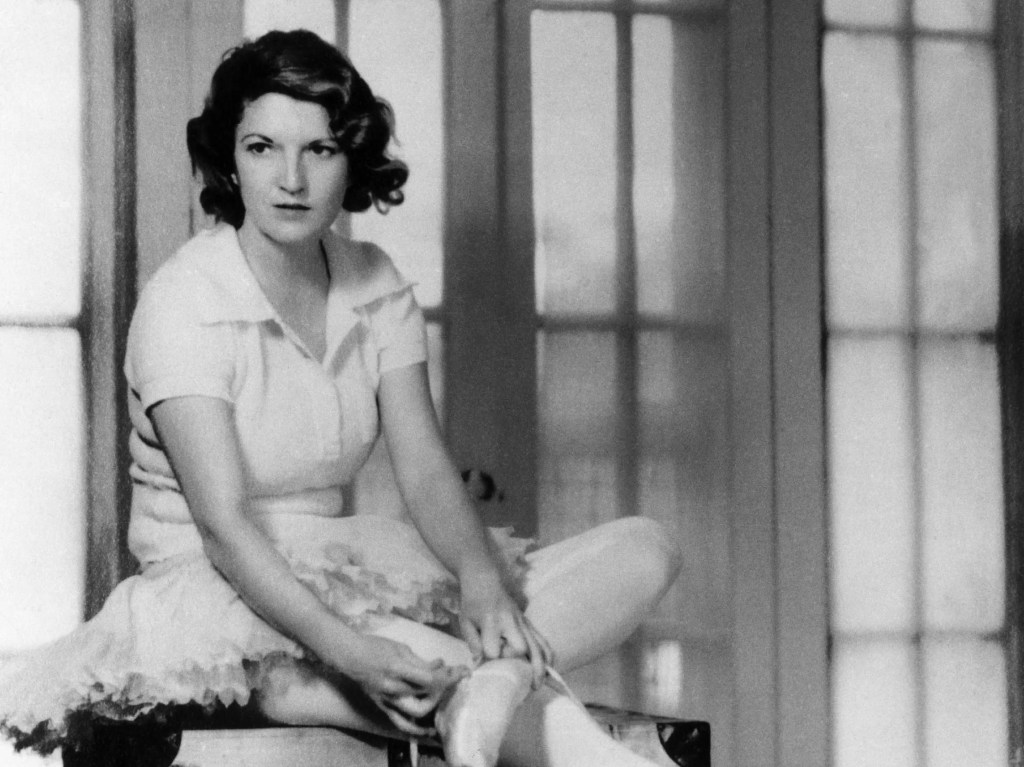
The 1920s. To this day, one time period brings to life so many vivid pictures. Endless champagne, flappers dancing into the night, and a party that went on for a decade. On top of it, the 1920s were considered a landmark time for women’s rights: women were given the right to vote, the birth control pill was invented, and bobbed hair was the norm. To this day, many women would choose this era if they could go back in time, in hopes of getting to live the lifestyle of the Flappers. Yet, in 1932, in a room in a psychiatric hospital, Zelda Fitzgerald started a novel that proved everything society currently believes about the 1920s was nothing more than an illusion of feminist ideals hiding the true reality of the times. Through the semi-autobiographical nature of Save Me the Waltz, Zelda paints a picture of her personal struggles in her protagonist: Alabama Knight (née Beggs). Through Alabama, Zelda allows the world to see the world through her eyes: giving her protagonist the passion and stubbornness that the author was known for. As a result, it becomes clear that the three main things that Zelda was known for: the flapper lifestyle, ballet, and her marriage, masked someone who was struggling, and whose fight for true independence ended in a harsh defeat.
Zelda versus Flapper Culture
“In the glorious, boozy party after the First World War, a new being burst defiantly on to the cultural stage: skinny, young, impetuous and flirtatious. She wore skirts above the knee, with stockings rolled provocatively; skimpy little dresses, maybe spangled for evening, and nothing much underneath. Her hair was cut short. She was flat-chested, hipless, wiry. She slouched and strutted, cursed mildly and refused to marry. She was young, eternally so, it seemed, and reveled in her youthfulness. She had the unmistakable physique of an adolescent boy. People called her a flapper.” (Simon 7)
In the years leading up to the 1920s, there were two dueling perspectives when it came to women. The first believed educating women and granting them independence would result in “race suicide” – better described as the idea that white women who graduated from university, held jobs, and waited on marrying would singlehandedly cause the destruction of the “superior” white race (Simon 51, 96). The second was championed by the suffrage movement, which gave women the chance to vote and hold political power – a privilege that up until that point had been denied (Simon 159). Out of these two conflicting ideas, came the Flapper Girl. From the outside looking in, the Flapper culture seemed to rebel against the first idea while embracing the second. With a youthful, adolescent attitude, it gave the illusion they were entirely too young to marry, while at the same time they had the sort of independence that generations of women before them could not even imagine. Zelda Fitzgerald, even today, was considered the ideal flapper. Within the first year of her marriage, she went from being virtually unknown to posing for magazines as the “real life” version of F. Scott Fitzgerald’s heroines (Meade loc 472). In many ways, Zelda was considered an American fairy tale, however, while the public got one side of the story, the woman’s reality was quite different, as shown in Save Me the Waltz.
Throughout what could be considered as Alabama’s “Flapper Years”, the actual party atmosphere one would relate to the Roaring ’20s provides a backdrop to the protagonist’s lack of expected independence. Any time Alabama’s social life is presented in the novel, it is extremely fast-paced. Scenes jump from one to the next before finishing, paragraphs run together, and it is nearly impossible to keep any sense of an actual timeline. The effect that Fitzgerald creates leaves the reader incredibly disoriented, which gives the audience the feeling of what it was to live in this atmosphere. Instead of the romanticized version her husband had a tendency of writing, Zelda throws the reader into the messiness and disappointing nature of this lifestyle. She summed it up well with the following quote, “New York was more full of reflections than of itself – the only concrete things in town were the abstractions.” (Fitzgerald Save Me the Waltz 54). Much of the atmosphere is described in this same melancholy tone, where people were too busy being famous and looking at the next big thing that they were too busy to truly live. Between the lines, it seems as if Fitzgerald herself regretted this part of her life, and how quickly she lived through it in her pursuit of avoiding boredom.
While the events within the city are told at a breakneck pace, Fitzgerald uses the moments Alabama and David spend at home to allow the readers to find their footing and breathe as they read. Through these events, it becomes clear why Alabama preferred being busy to the point of exhaustion and forgetfulness – it was so much better than the life she had at home. While many argue Zelda enjoyed the constant stream of men who would show up at the Fitzgerald house (Meade loc. 443), scenes shown in Save Me the Waltz claim otherwise. The most prominent example occurs during a visit from Alabama’s parents. David’s friends are found drunk in the Knight’s outdoor hammock, proceed to crash their dinner party, and once Alabama thinks they are gone, are found drunk with David early in the morning. They leave the kitchen a mess with the expectation Alabama would clean it (Fitzgerald Save Me the Waltz 55-65). The fact this is a scene Fitzgerald decided to elaborate on in a sea of disorientating glamour shows these are the memories from her life that dominated her memory. While she had plenty of her own history and stories to choose from, the fact Zelda took the pain she felt and gave it to Alabama instead of telling the wild stories that were expected, is very telling of how she looked back at that time in her life. While on paper, she was strong and independent, at home, she was treated like something she never felt was the kind of life for her: the life as her husband’s possession.
Zelda versus Ballet
“She wished she had been born in the ballet, or that she could bring herself to quit altogether. When she thought of giving up her work she grew sick and middle-aged. The miles and miles of pas de bourrée must have dug a path inevitably to somewhere.” (Fitzgerald, Save Me the Waltz, 192)
The common assumption in modern discourse is ballet has always been for the rich – both in those who want to dance and those who would attend. However, historically, it was not until the past fifty years ballet dancers came from money, mostly as a result of the rise of prices in childhood ballet lessons. Despite what modern media claims, the majority of ballet dancers came from poor backgrounds. Ballet for many was the way women who had no prospects could make a living that was still, for the most part, respected. The hope of finding a husband, becoming a star, of catching the eye of the rich, being able to rise above where you started – this was the dream of many who joined the ballet. It was a chance to rise above where she started.
As a result, the idea of joining because of the artistry and the beauty of the dance itself was incredibly controversial. In Save Me the Waltz, this controversy is shown within the character of Arienne. Arienne Jeanneret is both Alabama’s best friend and biggest competition and is meant to be a foil of the life a ballet dancer was supposed to have in comparison to the life Alabama led. She is introduced in the novel as someone whose independence was intimidating, with Fitzgerald writing, “David hated her guts because she tried to give him moral lectures about his opinions and his drinking, but she was not bourgeoise: she was gamine, full of strident jokes about firemen and soldiers, and Montmartre songs about priests and peasants and cuckolds. (Fitzgerald Save Me the Waltz 154). Throughout the book, Arienne starts as a friend to Alabama – taking the woman under her wing, being a confidant, while also always being the first to point out how Alabama never truly belonged. Arienne never truly believes Alabama will become a dancer, after all, the older woman was already a wife and mother, she had no need for work. While Arienne gets to join the corps famed Ballet Russes, Alabama gets a role as a soloist at an Italian ballet. While the overshadowing at the size of the role was enough for jealousy, historically there was an interesting trend within the ballet as well. For most of the early 1900s, France was the surprising epicenter of the Russian Ballet, as many considered them the best of the best under Sergei Diaghilev’s direction (Homans 312-313). However, Diaghilev’s fall and eventual death in 1929 were hinted at in the background for context within Save Me the Waltz, as Italy, the place of the Russian’s death, became the next European ballet epicenter. As a result, not only did Alabama outshine Arienne, but she made her career obsolete all in one go.
With the juxtaposition of Alabama and Arienne, Fitzgerald gives the reader a look into the struggle Zelda herself must have had during her study. The ballerinas in France during this time period had the independence most would believe the Flapper Girls had, but through Alabama, it is shown that because she was married, a mother, and American, she would never be able to break free to become her own person. Despite the fact that, unlike Zelda, Alabama was allowed a taste of independence in Italy, the truth in Save Me the Waltz comes from its realistic, yet tragic, ending. After an infection left her with blood poisoning and learning she would never be able to dance again, Alabama’s reaction says it all, ““Oh, my body,” she said. “And all that work for nothing!”” (Fitzgerald Save Me the Waltz 231). The ending of the novel shows Zelda’s regret for her entire lifestyle: Alabama melancholily decides she should have been like her mother, that it was better for women to conform to society’s harsh patriarchal standards than to try to follow their own dreams and ambitions. This statement is a powerful one, as it is one that is fully overlooked. The Jazz Era is often preached to be a time of women’s liberation, and yet Zelda instead issued a warning: breaking the rules was not worth it. She had tried, she had failed, and with how much of herself she lost in the process, Zelda no longer believed in her own want of independence or ambition – instead, it was better to settle. With how many other women came to the same conclusion, it becomes clear that despite what is believed, society was extremely harsh on them. The world will truly never know what was lost because of the ideas that were extinguished, which is a loss that society will never be able to fully fathom.
Zelda versus F. Scott. Fitzgerald
“As you may know I have been working intermittently for four years on a novel which covers the life we led in Europe. Since the spring of 1930 I have been unable to proceed because of the necessity of keeping Zelda in sanitariums. However, about fifty thousand words exist and this Zelda has heard, and literally one whole section of her novel is an imitation of it, of its rhythm, materials, even statements and speeches. Now you may say that the experience which two people have undergone is common is common property – one transmutes the same scene through different temperaments and it “comes out different.” As you will see from my letter to her there are only two episodes, both of which she has reduced to anecdotes but upon which whole sections of my book turn, that I have asked her to cut. (Fitzgerald and Fitzgerald 164-165)
F. Scott Fitzgerald to Dr. Squires, March 14, 1932
When looking at the Fitzgerald’s marriage, their wedding day seemed to predict the turbulent nature of their future together. On what should have been the happiest day of their lives, Scott Fitzgerald was so fidgety he forced the ceremony to start before all of Zelda’s relatives were there – only for everyone to find out he had not planned the reception as he had promised, effectively starting their marriage on a literal cold and rainy note (Meade loc. 273; Milford 62). While the two of them did have their highs, their marriage has been defined by the history books by their lows. Money troubles plagued them as both were prone to excessive spending, fights were constantly picked, and extramarital affairs by both parties were started with the motivation of getting revenge on the other. Ernest Hemingway perhaps explained the problems with their marriage best by saying, “Zelda was jealous of Scott’s work while Scott was jealous of Zelda. Zelda tried to keep Scott from writing, and Scott tried to keep Zelda from other people” (Milford 115). Within all of F. Scott Fitzgerald’s work he used their experiences together to create his work, even going as far as Zelda writing this iconic quote in a review of her husband’s novel The Beautiful and Damned, “It seems to me that on one page I recognized a portion of an old diary of mine which mysteriously disappeared shortly after my marriage, and also scraps of letters which, though considerably edited, sound to me vaguely familiar. In fact, Mr. Fitzgerald – I believe that is how he spells his name – seems to believe that plagiarism begins at home” (Fitzgerald The Collected Writings of Zelda Fitzgerald 388). However, when it came to Zelda deciding to do the same, it was not without pushback from her husband. Some days he loved the story, other days he resented it and demanded heavy edits. The male Fitzgerald also had issues with the fact his wife wanted to write about her own life, to the point he accused her of plagiarizing – an irony considering he openly plagiarized her work. However, despite the fight it was to get her novel to print, Zelda’s words gave her side of the story to her struggles in her marriage. Through her words, it becomes clear the actual reason her husband worked so hard to prevent it from happening: the novel painted him in a horrible light.
Like the Fitzgeralds, the tension between Alabama and David started on their wedding day, when he decided not to tell his new wife he spent the last of his money that day. However, the tension with their spending habits only continues throughout the chapter: David’s spending is always justified while Alabama’s is always written off as frivolous. An excellent example of this comes from the following excerpt:
“I’ve got two dollars to meet your family,” said David searching his clothes.
“I wanted to buy them some flowers.”
“Alabama,” said David sententiously, “that’s impractical. You’ve become nothing but an aesthetic theory – a chemistry formula for the decorative.” (Fitzgerald Save Me the Waltz 55)
The patronizing manner David has in this scene is one that becomes familiar throughout the novel, an attitude that shows he is frustrated with his wife’s longing for independence because he sees her more as a possession than as a person. For example, David originally was supportive of Alabama’s dancing career because it would get her out of his hair, however, when she chose to be serious about it and wanted to devote her time to it instead of being shown off by her husband to his friends, his opinions changed:
“Why will you never come out with me?” he said.
“Because I can’t work next day if I do.”
“Are you under the illusion that you’ll ever be any good at that stuff?”
“I suppose not; but there’s only one way to try.”
“We have no life at home any more.”
“You’re never there anyway – I’ve got to have something to do with myself.”
“Another female whine – I have to do my work.” (Fitzgerald Save Me the Waltz 148)
It is obvious by the excerpt David wanted a wife to show off, who then could be put away whenever it was convenient for him. There are countless conversations within the books where David insults the fact Alabama is not good at keeping a house, nor is she interested in staying home with their daughter. With how frequently this theme comes up, it seems as if this was not only a common problem in the novel but a common problem within the Fitzgerald household with Scott’s opinions of his wife. At a time where women had the illusion of independence and the longing to do whatever they wanted, it is very telling that this truly was just an illusion. Behind the scenes, Zelda, and so many others, still had to fight to get basic respect at home, and from the words she put to the page, it is clear Fitzgerald never got it from her husband. In fact, in a transcript from a session that was moderated by her doctor, Scott insisted Zelda’s writing was only sketches of life with nothing to say, making her both a third-rate writer and a third-rate ballet dancer (Fitzgerald Save Me the Waltz xxiii). Those insults caused Zelda to give up her writing career before it truly started, breaking her down more at a time where she needed his support.
Conclusion
When Save me the Waltz was first published in 1932, it was panned by critics and readers alike, selling less than half of the intended run. For thirty-five years, it was inaccessible, and in 1967, long after Zelda’s death, it was republished – this time with all of the errors that had made it hard to read the first time corrected (Fitzgerald Save Me the Waltz xvii). Between the many threats Scott Fitzgerald gave to her publishers, to the constant typos, to the weight her husband had in the literary world, Zelda had been set up for failure the moment she decided to put her pen to paper. The words she wrote, for years, went ignored, and still, today are vastly undiscovered by many. This is a shame as they give a look into the Jazz Age that many people ask for whenever the topic comes up. Zelda pulled back the glittery curtain on what it meant to be a Flapper, highlighted the independence of dancers while simultaneously explaining why she had been shut out of it, and gave a look into the marriage that for so long had been given one-sided insights by her husband. One of the great literary tragedies comes from the fact Zelda never got to see her work be a success, in fact, she died believing it was not anything special. Yet, she gave many the gift of knowledge of this era to those who knew where to look for it. A look into the Roaring 20s without the nostalgic and romanticized lens that tends to be applied to it. This era did a lot when it came to women’s rights, however, it is unlikely the women who lived in this time truly felt that way. Like Zelda, many were crushed underneath years of patriarchal thinking, punished for having the audacity to speak their minds and wanting to live their own lives. It makes one wonder what Zelda Fitzgerald would have been able to accomplish had she lived in modern-day – a time where her mental illness could have been better-taken care of, her introspective and observant view of the world cherished, and her longing for independence would not have been immediately squashed down. While what happened to Zelda Fitzgerald should be taken as a warning to the world, one might hope that others will be inspired to follow in her footsteps. That they will write how the world truly is for those outside the majority, so when others look back to this time in history with a romanticized lens, they too will see the truth of our current reality and thus be able to see the leaps forward that society has made.
Bibliography
Fitzgerald, F. Scott, and Zelda Fitzgerald. Dear Scott, Dearest Zelda: The Love Letters of F. Scott and Zelda Fitzgerald. Edited by Jackson R. Bryer and Cathy W. Barks, Scribner, 2002.
Fitzgerald, Zelda. The Collected Writings of Zelda Fitzgerald. Edited by Matthew J. Bruccoli, Collier Books, 1992.
Fitzgerald, Zelda. Save Me the Waltz. Handheld Press Ltd., 2019.
Homans, Jennifer. Apollo’s Angels: A History of Ballet. Random House, 2010.
Meade, Marion. Bobbed Hair and Bathtub Gin: Writers Running Wild in the Twenties. Nan A. Talese, 2009. Kindle Ebook.
Milford, Nancy. Zelda. HarperCollins Publishers, 1970.
Simon, Linda. Lost Girls: The Invention of the Flapper. Reaktion Books, 2017.
Taylor, Kendall. The Gatsby Affair: Scott, Zelda, and the Betrayal That Shaped an American Classic. Rowman & Littlefield, 2018. Kindle Ebook.Taylor, Kendall. Sometimes Madness is Wisdom – Zelda and Scott Fitzgerald: A Marriage. The Ballantine Publishing Group, 2001.






Leave a Reply